

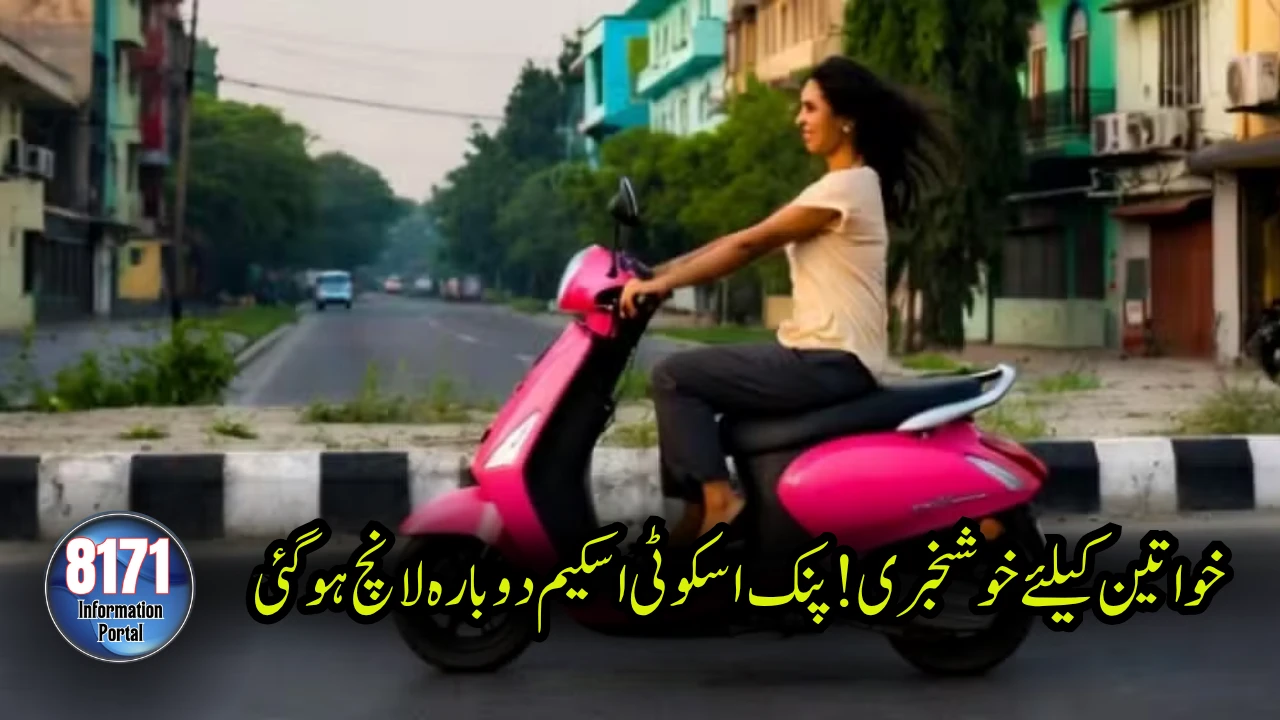
The Sindh Government has officially announced the launch of the second phase of the Pink Scooty Scheme, a women-only transport initiative aimed at promoting independence, safety, and accessibility for female commuters.
Senior Provincial Minister Sharjeel Inam Memon confirmed that preparations are in full swing to begin distribution of scooters under the next phase, following the program’s successful debut earlier this year.
💬 Minister’s Statement
Sharjeel Memon encouraged women across Sindh to obtain driving licenses, complete riding training, and register for the Pink Scooty Scheme to take advantage of this opportunity.
“The first phase received an overwhelming response,” he said. “Dozens of women learned to ride, got their licenses, and now use Pink Scooties for their daily commutes with confidence.”
He added that the second phase aims to expand the initiative further, enabling more women to travel safely and independently for education and employment.
🚦 Part of a Broader Transport Vision
The Pink Scooty Scheme is part of Sindh’s broader vision to improve urban transport facilities. The government has already introduced several projects including:
-
🚍 People’s Bus Service
-
💗 Pink Bus Service (Women-Only)
-
⚡ Electric Bus Service
Together, these initiatives aim to make public transportation more inclusive, affordable, and safe — particularly for women in Karachi and other major cities.
📝 Registration & Eligibility
Women interested in the scheme can register by:
-
Applying online through the official Sindh government transport portal https://smta.sindh.gov.pk/.
-
Submitting necessary documents, including CNIC, learner’s or valid driving license.
-
Completing a free scooter training program conducted under the scheme.
Successful applicants will receive interest-free scooters with easy installment plans, making it easier for students and working women to afford their own ride.
🎯 Why It Matters
The Pink Scooty Scheme is more than a transport project — it’s a social empowerment program. It allows women to move freely, save travel costs, and feel secure while commuting to schools, offices, and universities.
It’s a big step toward building a gender-inclusive mobility system in Pakistan’s largest province.
